Tag: Amazon

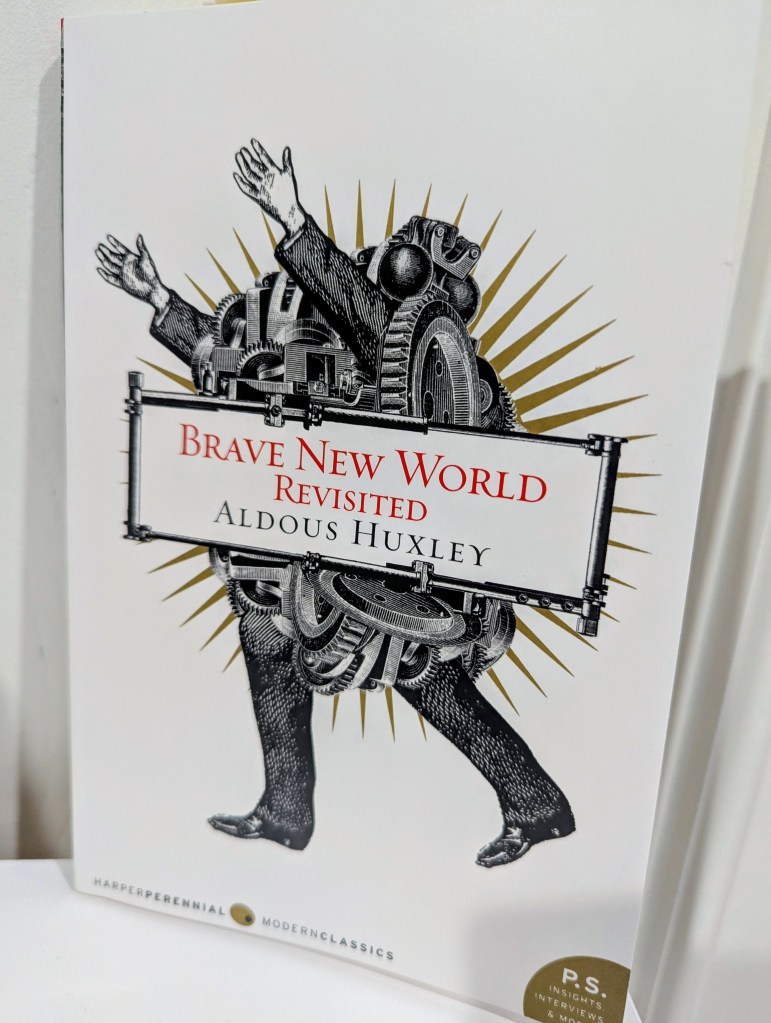
Brave New World Revisited

About this book

After reading Brave New World, I discovered Brave New World Revisited and after checking out a few reviews decided I needed to read it to understand Aldous Huxley’s thoughts about the world some 26 years after writing his original book. This is a relatively short book at 123 pages. I bought the paperback version from Thriftbooks, which has become my source for books during the past 5 months. The book is nicely bound and has a medium sized font making it easy to read. The quality of the pages are good and the book is 8″ high x 5 1/4″ wide, making it the ideal size to hold comfortably. I don’t recall what I paid for it, but it was less than $17 USD. The book has 12 chapters and most of them have only a few pages, which facilitates a book you can read a chapter and resume later. At the end of the book there is some pretty cool additions like About the Author, Some reviews and some of the authors own words about this book, a letter to George Orwell, and the complete Aldous Huxley bibliography.

Summary

There are so many interesting things about this book, but in my usual way I will try not to give you so much that its spoils your experience when reading the book. Remember, Brave New World was published in 1932 and Brave New World Revisited in 1958, so some 26 years had passed between the two books. Brave New World Revisited is a very philosophical look at the factors that exist or may exist that could make the dystopian society of Brave New World come true. One of the themes that Huxley mentions several times, is that he views the authoritarian regime of the future to be more like Brave New World than that of the brutal dictatorship of Orwell’s 1984.

I will outline a few of the factors that Huxley expounded on that could lead us to the authoritarian society:

Over-Population

At the time Huxley wrote Brave New World Revisited the population of the world was booming. He mentions that in 1931 when he was writing Brave New World the world’s population was a little less that 2 billion people and 27 years later it was 2.8 billion. People were beginning to live longer with new discoveries in agriculture and medicine were helping to spur on a larger population. His fear was that the population would get so large that the we could no longer support it with the resources we would have available. It was a valid assumption in 1958 and this theory was held by most people up until recent times, where we now are seeing declining birth rates. Huxley felt that over population to be one of the factors that would lead away from democracy to aristocracy. Remember at the time birth control pills were not yet available. Strangely enough he mentions that there would be 5.5 billion people by time his grand daughter was 50, so let’s say that was 2008. It turns out the world’s population in 2008 was about 6.7 billion.

Up until maybe the last 10 years or so, the fear of over population was a major concern, and still is in some parts of the world, but today we might not look at over population as a major driver of authoritarian regimes.

Quality of the Populace

One of the claims that Huxley makes is over the past few decades there has been an overall decline in IQ and health of the population. Some of this has been caused by advances in medicine, where in the past people may have died, but now were able to propagate their genes on to the next generation. His concern here also goes back to a declining death rates adding to overall population. If in fact IQ has been declining over the decades for various reasons, does this bode well for a flourishing democracy? This may sound confusing, but think about it as kind of an anti eugenics scenario brought about by a weaker gene pool surviving due to advances in medicine.

Over Organization

Under this title of over organization Huxley discusses his growing concern that technology would result in power being consolidated in fewer and fewer hands. His concern is that small business would be squeezed out by large multi-national corporations and wealth would belong to a few oligarchs that had near monopolies. Can you say Amazon, Tesla, Meta, Google? He wrote this around 1957 and it rings true today in 2025. These large, near monopolies have also created super organized companies. Huxley’s fear was this would create people that were more like robots and lacked creative thinking, and any appreciation for freedom, making them easy marks for authoritarianism.

Additional Drivers

In addition to the factors of over population, quality of the people, and over organization Huxley provides the details on how the would be autocrats use propaganda, salesmanship, brainwashing, and even chemical persuasion to stamp out democracy.

When you look at all the factors cited in Brave New World Revisited it is almost a playbook for the would be autocrat or dictator. One of the scary points that Huxley makes, is that we have a certain percentage of the population that is very responsive to outside suggestion. These people will make it almost impossible to support a democracy or even foster the environment for one to form. Now we look ahead from 1958 when Huxley provided his analysis and forecast for the future to today, in 2025. It appears that this relatively small slice of the population that is extremely suggestible has grown to be anywhere from 25-30% of the US population.

I usually avoid politics in most of my writing, but the Trump Administration and (MAGA) Make America Great Again movement is moving quickly down the authoritarian road. I can tell you that they haven’t read Brave New World as their methods are somewhat crude, often in your face, and are not very clever. This doesn’t fool the populace as much as it enrages it.

Recommendation

If you enjoyed reading Brave New World you will find it quite natural to read Brave New World Revisited. In the 26 or 27 years that passed between each of these books the world changed considerably, which gave Huxley some insight into what the future might hold. Aldous Huxley had an eerie sense of how the world would change in the future and as you read this book you will see just how spot on he was when you compare his forecasts to the world today. When you read Aldous Huxley’s books you are struck with just how intelligent he was. Truly an amazing individual, part story teller and part philosopher. I highly recommend Brave New World Revisited. Of course with the caveat that you read Brave New World first.

This won’t be the last book I review written by Aldous Huxley, so stay tuned.

About the Author

Wikipedia does a nice job providing information about the author. Here is snippet:

Aldous Leonard Huxley (26 July 1894 – 22 November 1963) was an English writer and philosopher. His bibliography spans nearly 50 books, including non-fiction works, as well as essays, narratives, and poems.

Born into the prominent Huxley family, he graduated from Balliol College, Oxford, with a degree in English literature. Early in his career, he published short stories and poetry and edited the literary magazine Oxford Poetry, before going on to publish travel writing, satire, and screenplays. He spent the latter part of his life in the United States, living in Los Angeles from 1937 until his death. By the end of his life, Huxley was widely acknowledged as one of the foremost intellectuals of his time. He was nominated for the Nobel Prize in Literature nine times,[9] and was elected Companion of Literature by the Royal Society of Literature in 1962.

https://en.wikipedia.org/wiki/Aldous_Huxley

—————————————————————————————————-

“Copyright 2025 InspirationalBookReviews.com. All Rights Reserved”

Please check out my companion blog thestoicbuddhist.com

I appreciate all comments and likes. Please follow my blog and you will be emailed notification of all new posts.

Namaste

The Alchemist – Book Review

I decided to read The Alchemist by Paulo Coelho because of so many recommendations I encountered in my reading and possibly from something I saw on YouTube. As with the majority of my reviews I am not going to spoil the book for you by giving you a blow by blow commentary, but focus more on what I perceive as the reasons you should consider reading it.

Book Quality

Before I provide a brief summary of the book I wanted to discuss the physical aspects of the hard cover version I read. Overall the book is very high quality from the cover, quality of the pages, and type. The size of the book is just right 8 1/2 inches high and about 6 inches wide. As mentioned the type quality is pretty good and probably about 11 pitch making the 176 pages easy to read. This version of the book by Paulo Coelho  (Author), was published by HarperCollins translated by Alan R. Clarke, can be found at Amazon costing a bit more than $22 USD and strangely enough the same book in paperback was $27 USD. The author Paulo Coelho has written many books; more about him in the section About the Author below. Buy the hardcover version, the Alan R. Clarke translation; you won’t regret it.

Summary

To start out with The Alchemist was written as a fictional story first, more specifically it is the story of a shepherd boy named Santiago that is on a journey to follow his dreams. His adventures take him far from his home where he meets a number of very interesting characters, and during his travels he experiences a number of personal revelations. While this is a good story, the book has several themes, which are intended to be teaching moments. Some of those key themes include:

  • Our propensity to give up on dreams and call it fate
  • When you want something bad enough the universe conspires to help you achieve it (Law of Attraction)
  • Faith and the importance of religion
  • The importance of pursuing your dreams
  • Omens as a guide on your journey through life
  • How following your dreams is about what you become
  • Life, conflict, and death

This book is only 176 pages long, so something you could read in a day or two. There are some interesting, almost mystical characters that the boy encounters during his adventure. At the end of the book there is an Epilogue and a brief section about our author.

Recommendation

I really enjoyed reading this book and think it lives up to the hype that I had heard about it. I feel that it belongs on this blog site as it is inspirational, has some fairly profound messages, and is fun read. The author paints a picture of this fantastical journey for our hero Santiago. It is really a story about personal growth and the attainment of your dreams.

As often happens to us from time to time we need some inspiration to to either begin or continue following our dreams, The Alchemist can provide that to you. I read the book over a couple of days and couldn’t put it down. In addition to enjoying a good story, I also found inspiration in the numerous not so subtle messages conveyed by the author.

As I mentioned in my opening paragraph I am hesitant to go into the plot, explaining this story in a lot of detail as especially in this case of this book, it would ruin it for you. Reading is about discovery and this story flows and builds upon itself, and if you know all the characters and how it turns out, well then you just won’t enjoy it as much. With that said, if you need a little kick in the ass to start following your dreams, then I would highly recommend The Alchemist.

Note: If you enjoy The Alchemist and I think you will, there is a companion book called Warrior of the Light that I have yet to read, but it is next up for me from the Paulo Coelho library. Here is a little overview from a page on Amazon:

Warrior of the Light is a timeless and inspirational companion to The Alchemist—an international bestseller that has beguiled millions of readers around the world. Every short passage invites us to live out our dreams, to embrace the uncertainty of life, and to rise to our own unique destiny. In his inimitable style, Paulo Coelho helps bring out the Warrior of the Light within each of us. He shows readers how to embark upon the way of the Warrior: the one who appreciates the miracle of being alive, the one who accepts failure, and the one whose quest leads to fulfillment and joy.

Namaste

About the Author

Paulo Coelho de Souza born 24 August 1947) is a Brazilian lyricist and novelist and a member of the Brazilian Academy of Letters since 2002. His novel The Alchemist became an international best-seller and he has published 28 more books since then.

Biography

Paulo Coelho was born in Rio de Janeiro, Brazil, and attended a Jesuit school. At 17, Coelho’s parents committed him to a mental institution from which he escaped three times before being released at the age of 20. Coelho later remarked that “It wasn’t that they wanted to hurt me, but they didn’t know what to do… They did not do that to destroy me, they did that to save me.” At his parents’ wishes, Coelho enrolled in law school and abandoned his dream of becoming a writer. One year later, he dropped out and lived life as a hippie, traveling through South America, North Africa, Mexico, and Europe and started using drugs in the 1960s.

Upon his return to Brazil, Coelho worked as a songwriter, composing lyrics for Elis Regina, Rita Lee, and Brazilian icon Raul Seixas. Composing with Raul led to Coelho being associated with magic and occultism, due to the content of some songs. He is often accused that these songs were rip-offs of foreign songs not well known in Brazil at the time. In 1974, by his account, he was arrested for “subversive” activities and tortured by the ruling military government, who had taken power ten years earlier and viewed his lyrics as left-wing and dangerous. Coelho also worked as an actor, journalist and theatre director before pursuing his writing career.

Coelho married artist Christina Oiticica in 1980. Together they had previously spent half the year in Rio de Janeiro and the other half in a country house in the Pyrenees Mountains of France, but now the couple reside permanently in Geneva, Switzerland.

In 1986 Coelho walked the 500-plus mile Road of Santiago de Compostela in northwestern Spain. On the path, he had a spiritual awakening, which he described autobiographically in The Pilgrimage. In an interview, Coelho stated “[In 1986], I was very happy in the things I was doing. I was doing something that gave me food and water – to use the metaphor in The Alchemist, I was working, I had a person whom I loved, I had money, but I was not fulfilling my dream. My dream was, and still is, to be a writer.” Coelho would leave his lucrative career as a songwriter and pursue writing full-time.

The Pilgrim – Story of Paulo Coelho is the international title for the biographical film Não Pare na Pista, a co-production between Brazil’s Drama Films and the Spanish Babel Films, in which the younger and older Coelho are played by two different actors. One of the producers, Iôna de Macêdo, told Screen International: “The film tells the story of a man who has a dream. It’s a little like Alice in Wonderland – he’s someone who is too big for his house.” The film, shot in Portuguese, had its premiere in Brazilian theaters in 2014 and was internationally distributed in 2015.

Read more about the author and a complete list of his books: https://en.wikipedia.org/wiki/Paulo_Coelho

“Copyright 2023 InspirationalBookReviews.com. All Rights Reserved”

Please check out my companion blog TheStoicBuddhist.com

Stillness Is The Key by Ryan Holiday – book review

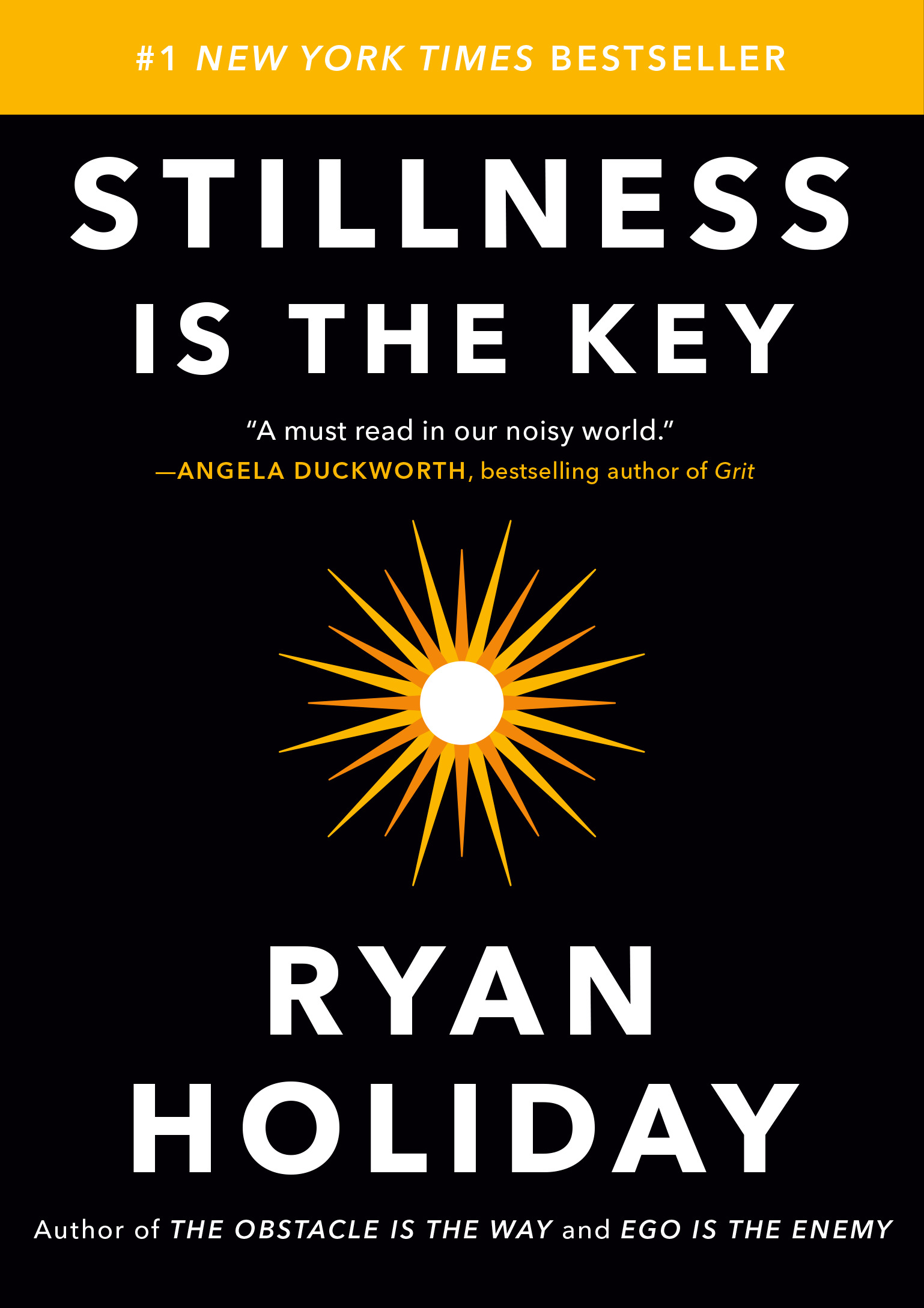
Stillness Is the Key

Overview

I recently came across the book by Ryan Holiday called “Stillness Is The Key”. I listened to this book via Audible, which took about 7 hours and is narrated by the author who does a very good job. The hardcover version of the book is 288 pages long, and can be acquired at Amazon for less than $15. I became interested in Ryan Holiday by watching some of his videos on YouTube, he has a channel called The Daily Stoic, so I thought I would check out this book. Actually he is a very popular author, media consultant, and entrepreneur appearing on many other people’s YouTube channels. He has several books that he has written and I will be reviewing another of his books in the near future.

If you are new to reading my book reviews, you will notice that I don’t provide lengthy descriptions of the content of the book. One of the reasons I do this is as not to spoil it for you, and another reason is that I am more interested in writing about what I perceive is the value of the book for the reader. You might also notice that almost every book I review on this site is one that I would recommend and that is because the name of this site is Inspirationalbookreviews.com not Wasteoftimebookreviews.com.

What I liked about this book

Everything!

Seriously this is a well written book citing very interesting stories about people like Tiger Woods, John F. Kennedy, and Mr. Fred Rogers, Winston Churchill just to name a few. Each chapter delves into a method for obtaining what he calls stillness, or maybe a sense of calm where rationale thinking can thrive. It also has a number of chapters that provide ideas on how you can enrich your life, but always returns to the theme of how to obtain stillness or in some cases how it was lost. There are also a lot of great quotes by the stoics such as Epictetus and Marcus Aurelius. This should be no surprise if you’ve watched any of his YouTube videos, as Ryan is a big fan of Stoicism. Here is a partial list of some of the chapters in the book:

  • Become Present
  • Limit Your Inputs
  • Slow Down, Think Deeply
  • Empty The Mind
  • Start Journaling
  • Choose Virtue
  • Enough

What I didn’t like about this book

Loved it all and I just wish it could have been 1,000 pages long.

Recommendation

Go out an buy it today! This is an excellent book that I intend to read or listen to again and again. In this busy world where we are all driving ourselves crazy, this book offers the antidote to chaos. This book isn’t some self help bullshit that is intended to fire you up and motivate you to do more with your life. In fact it is quite the opposite, offering insights on how to calm yourself, focus, play, and begin enjoying your life.


If you would like to support this blog, you can purchase the eBook (eBooks.com) version of this book at:

Stillness Is the Key

About the Author

Ryan Holiday (born June 16, 1987) is an American author, marketer, entrepreneur and founder of the creative advisory firm Brass Check. He is a media strategist, the former director of marketing for American Apparel and a media columnist and editor-at-large for the New York Observer.

Early career
Holiday began his professional career after dropping out of college at the age of 19. He briefly attended University of California, Riverside, where he studied political science and creative writing. He worked for Tucker Max, the controversial fratire author, to orchestrate a number of controversial media stunts including a boycott of Max’s work as part of a movie launch. Later, Holiday worked with Robert Greene, author of The 48 Laws of Power, on Greene’s 2009 New York Times bestselling book, The 50th Law. Holiday served as Director of Marketing for American Apparel and as an adviser to founder Dov Charney. He left the company in October 2014. He has been responsible for a number of media stunts, and written extensively on the topic of media manipulation.

Writing
Holiday is the author of several books and has written for Forbes, Fast Company, The Huffington Post, The Columbia Journalism Review, The Guardian, Thought Catalog, Medium.com and the New York Observer, where he is the media columnist.

In July 2012, his first book Trust Me, I’m Lying: Confessions of a Media Manipulator was released by Portfolio/Penguin. The book tries to expose flaws in current online journalism system and catalogs the author’s exploitation of them. It debuted on the Wall Street Journal bestseller list. His second book Growth Hacker Marketing was originally published in September 2013 by Portfolio/Penguin and then expanded into a print edition in 2014. The book shows how traditional marketing efforts (billboards, press releases) are no longer the most effective, and why growth hacking is cheaper and more effective in today’s market. The book was named one of Inc. Magazine’s top 10 marketing books of 2014.

In February 2014, Holiday was named editor-at-large of the Business & Technology section at the New York Observer.

Holiday’s third book The Obstacle Is The Way, was published May 1, 2014, also by Portfolio/Penguin. The book is based on the Stoic exercise of framing obstacles as opportunities. The book has sold more than 230,000 copies and was read by the New England Patriots during their 2014 Super Bowl-winning season, as well as distributed through the locker room of the Seattle Seahawks in the following offseason. The Obstacle Is the Way reached #1 on the Wall Street Journal Bestseller List in 2019, five years after its initial release. Two-time NBA Champion Chris Bosh listed The Obstacle Is the Way as his favorite book and added that, when his head coach Erik Spoelstra gifted Miami Heat players copies of the book, Bosh had already read it twice. During a press conference at the Masters in 2019, four-time major champion golfer Rory McIlroy said he read The Obstacle Is the Way as well as Holiday’s following book, Ego Is the Enemy, leading up to the tournament.

In 2016, he published two books. The first, Ego Is the Enemy, uses various historical figures as case studies to illustrate the perils of egotism. The second, The Daily Stoic, is a daily devotional of Stoic meditations. Both books went on to become best sellers with Daily Stoic reaching #3 overall on the bestseller list.

In 2018 he published Conspiracy: Peter Thiel, Hulk Hogan, Gawker, and the Anatomy of Intrigue. It is about the lawsuit between Gawker Media and wrestler Hulk Hogan, as well as Peter Thiel’s involvement in the dispute. It was favorably reviewed by William D. Cohan of the New York Times, who called the book, “one helluva page-turner.”

His latest book, Stillness Is the Key, was published in October 2019.

Stoicism
Holiday, through his books, articles and lectures, has been credited by the New York Times with the increasing popularity of stoicism. He was also described as “leading the charge for stoicism,” which has been noted for gaining traction among Silicon Valley entrepreneurs.


Atomic Habits by James Clear – book review

Atomic Habits

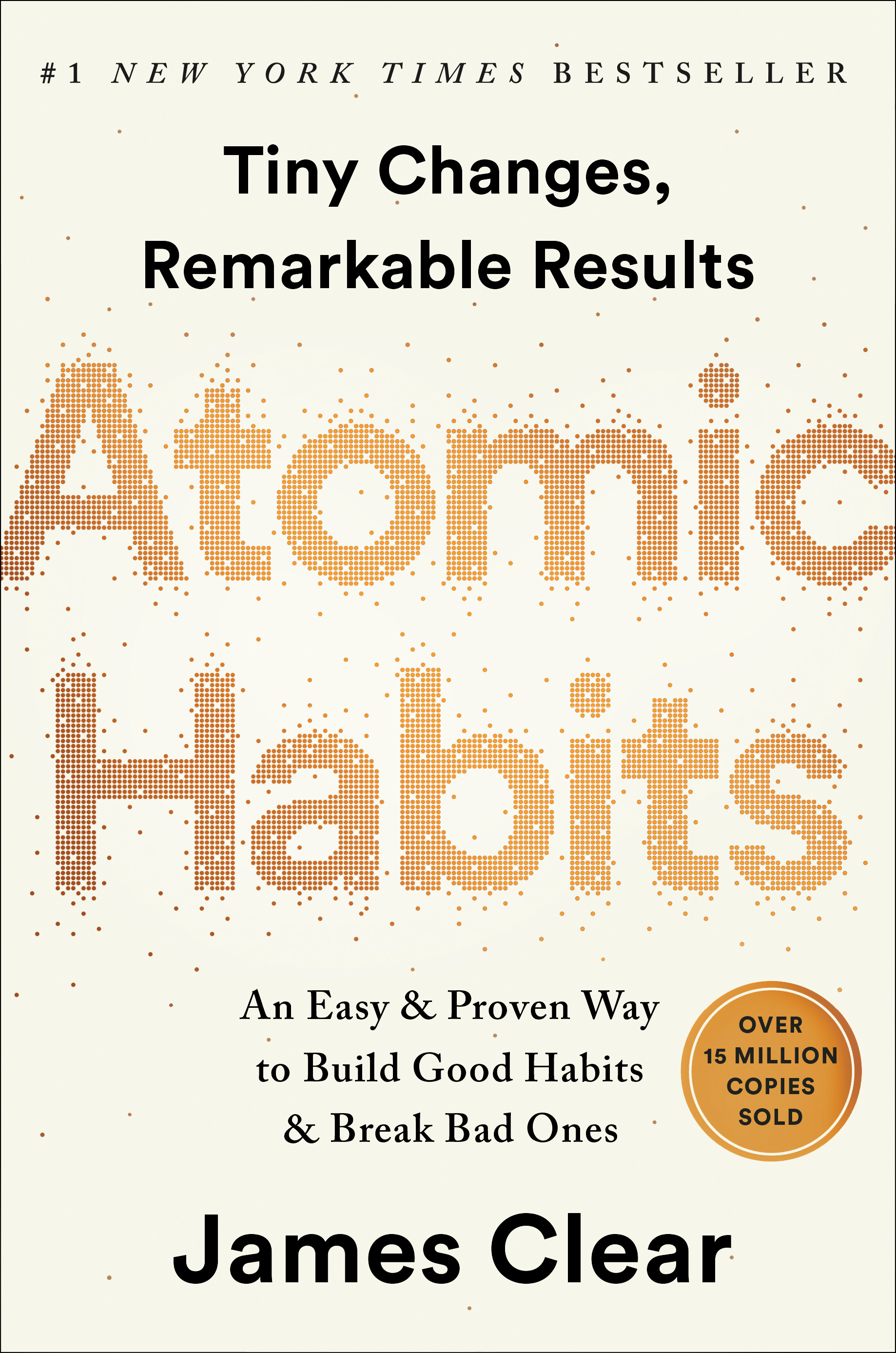
Atomic Habits is a book written by James Clear and as you might guess it is about ways to create habits. I happened to opt for the Audible version of this book, which by the way is narrated by the author. It’s not a terribly long read or even listening to it on Audible is less than 6 hours. The paperback version is 205 pages long and is $6 more expensive than the hardcover version on Amazon, which just doesn’t seem right.

What I liked about this book:

The premise behind the book is that the small (atomic) habits you adopt in your life have a major impact on your happiness and success in life. The author explores the psychology that underlies the adoption of a new habit and provides a number of proven approaches to adopting them. The author claims that it is not how long you have been working on a new habit, but instead the number of repetitions. An example would be say I want to take up playing guitar and once a week I practice playing guitar, so over the course of a month I would have put in 4 repetitions. Contrast this to practicing every day and over the course of two weeks I have practiced 14 times. Another interesting tip was to start very small or as the author says make it easy. With this method you would perform a new habit as little as 2 minutes. Now anyone can do a new habit for 2 minutes, but the psychology here is that it makes it easier to stick with it starting out with these small intervals. Anyone can run, practice guitar, workout with weights, keep a journal, or meditate for 2 minutes. What happens over time is you begin to extend that time period as you have already established a habit. Let’s say I go to the gym and start out doing 2 minutes of exercise, pretty soon you say well I took the time to get dressed and drive to the gym, maybe I can do more. The idea here is that I didn’t try to take a monumental leap from not working out to working out for an hour, and I will be less likely to quit before my workouts become a full fledged habit. There are many more techniques explored in this book that I won’t go into that will help you establish and stick with any new habits that you would like to adopt in your life.

What I didn’t like about this book:

While I was very interested in how to build new habits, I was also interested on how to get rid of some of my bad habits. While the author has a chapter on eliminating bad habits, much of that chapter is focused on creating good habits, so I didn’t get a lot of insights on how I might eliminate a bad habit. About all that was said is understand the negative ramifications of a bad habit and focus on the benefits of getting rid of it. Been there, done that!

Recommendation:

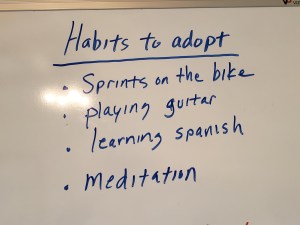
Overall I would give this book a thumbs up! There are so many good techniques for building a habit in this book that you are bound take something away from it that you can use yourself to create new habits. The author also goes into great detail on not only how to create a habit, but how to make it stick. One of the assertions the author makes is that it is much more important to learn to love the process or system that you are pursuing than just setting goals. While goals are great, they are not doing. It is more important to take action and fall in love with the idea of gaining some form of mastery than whatever the goal might be. The book did inspire me to pursue some new habits for myself which include:

If you would like to support this blog, you can purchase this book at:

eBooks.com

Atomic Habits

Audiobooks.com

Atomic Habits: Tiny Changes, Remarkable Results

About the Author James Clear:

Hi there, I’m James Clear. I’m an American author, entrepreneur, and photographer. I’m also the guy behind JamesClear.com (naturally).

This website is the home of my life’s work. I write about habits and human potential. The central question I’m trying to answer through my work is, “How can we live better?”

In order to answer that question, I uncover the latest scientific research and explain it in a way that you can easily understand and actually use. As I share these science-based ideas for living a better life, I like to showcase the habits and rituals of athletes, artists, and entrepreneurs. By analyzing the stories of top performers from many different fields and understanding proven scientific principles, we can start to tease out the common characteristics that make these people the best at what they do.

My specific focus is on self-improvement tips based on proven scientific research.

I believe the best way to change the world is in concentric circles: start with yourself and work your way out from there. If you get yourself sorted out, then that is one less person for the world to worry about. You’ll be in a position to contribute rather than consume. You will add order rather than disorder.

I write about the art and science of how to live better. Science because I am concerned with the root causes of our behavior and the data behind high performance. Art because I want to figure out how to apply these ideas and put them into daily practice.

But I don’t merely write about things. Along the way, I like to try out the concepts for myself as I experiment with building better habits as an entrepreneur, writer, and weightlifter. In the end, my work ends up being one-part storytelling, one-part academic research, one-part personal experiment. It’s a colorful blend of inspirational stories, academic science, hard-earned wisdom.

Source: https://jamesclear.com/about